_1730691017423.webp)

The Science Behind Pro Xylane for Skin Moisturization
As the field of skincare creation has grown, pro xylane has become a well-known cosmetic active ingredient that is used in anti-aging and moisture-focused skincare products today. This man-made chemical, which was made using green chemistry methods and is based on xylose found in beech wood, is often used in beauty science because it helps keep skin soft and moist. Pro Xylane is not marketed as a medical treatment, but as a useful beauty ingredient that helps improve the look of skin by supporting hydration and structural health. Let's look at Pro Xylane's science history and how it is used in skin care products.
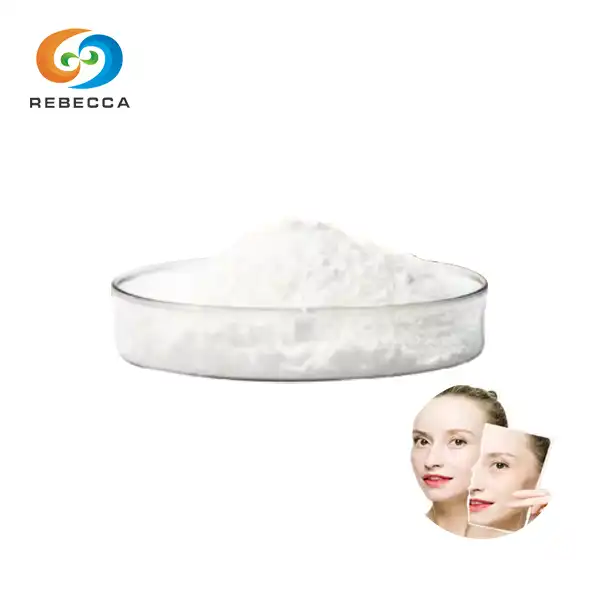
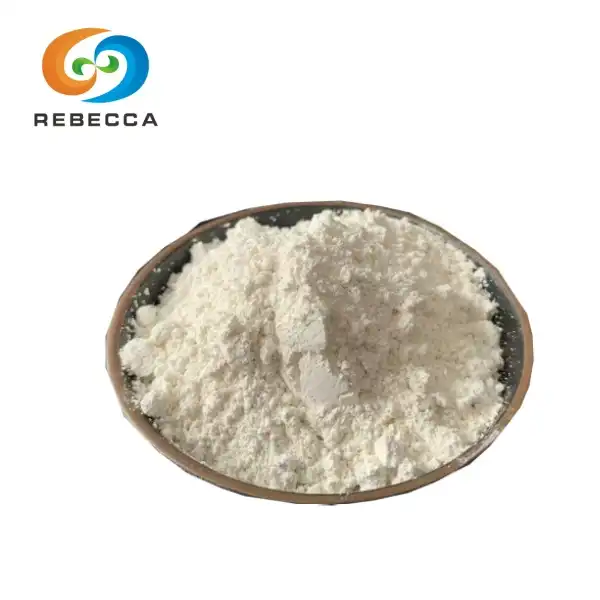
Pro Xylane
Product name: (S)-Pro-xylane
Other names: (S)-Hydroxypropyl tetrahydropyrantriol
CAS number: 439685-79-7
Molecular formula: C8H16O5
Specification:≥98%
Source: Proxylane is a mixture of glycoproteins derived from xylose
Properties: Proxylane is a chemical substance with anti-aging activity. It is mild and non-irritating and suitable for a variety of skin types
Main effects: Promote collagen synthesis, improve fine lines, moisturize, anti-oxidation, anti-inflammatory
Application areas: cosmetics, medicines
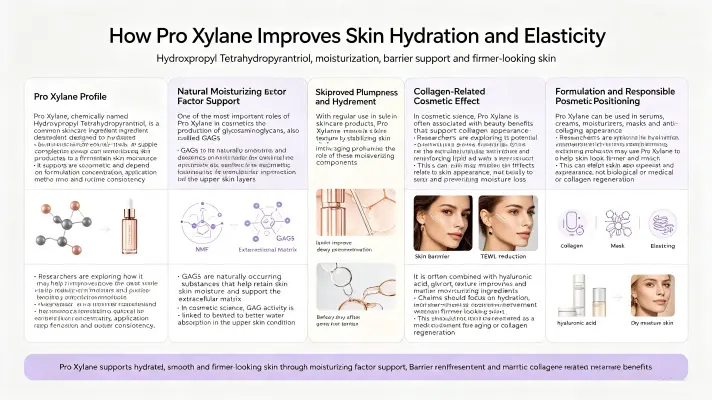
How Pro Xylane Improves Skin Hydration and Elasticity?
Pro Xylane, whose chemical name is Hydroxypropyl Tetrahydropyrantriol, is a common ingredient in skin care products that are meant to hydrate the skin and make it look better. Because of how its molecules are structured, it can be used in makeup delivery systems that help keep skin's wetness level in check and make it look firmer overall.
Enhancing Natural Moisturizing Factors
One of the most important things that Pro Xylane does in cosmetics is help with processes that deal with skin moisture. Researchers are looking into how it can help improve the production of glycosaminoglycans (GAGs), which are naturally occurring substances that help keep skin moist and support the extracellular matrix.
In the field of beauty science, action related to GAG is linked to better water absorption in the top layers of skin. Pro Xylane may help improve the look of skin plumpness and wetness by supporting these ingredients when used regularly in skincare products. These effects are purely visual and depend on the quantity of the formula and how it is delivered.
Strengthening the Skin Barrier
Pro Xylane is often found in skin care products that are meant to help the skin's barrier function. Keeping the skin layer in good shape is an important part of keeping the skin smooth and stopping it from losing wetness. In cosmetic uses, Pro Xylane may help improve skin quality by keeping the skin's humidity level stable and strengthening the structure of the lipids and water on the surface. This makes skin look softer and more resilient, especially when used with dry or older skin care products.
Promoting Collagen-Related Support
In the field of makeup product science, Pro Xylane is often linked to beauty promises that support collagen. Researchers are looking into what role it might play in supporting the extracellular matrix environment, which is what keeps the structure and flexibility of skin. Because collagen levels naturally drop with age, anti-aging products use makeup ingredients like Pro Xylane to help skin look more hard and pliable. It is important to keep in mind that these results are not biological or medical collagen renewal. Instead, they are changes to the way the skin looks.
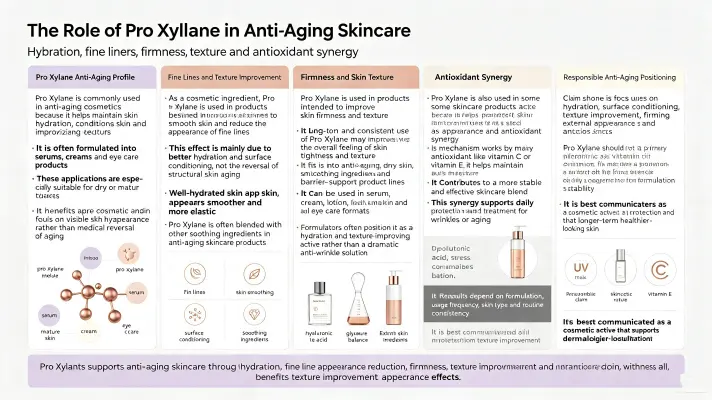
The Role of Pro Xylane in Anti-Aging Skincare
Pro Xylane is commonly found in anti-aging cosmetics because it helps keep skin hydrated, conditions the skin, and improves its look. Most of the time, it is made into serums, creams, and eye care items for dry or old skin.
Reducing Fine Lines and Improving Skin Appearance
As a makeup ingredient, Pro Xylane is often found in products that aim to smooth out the face and make fine lines less noticeable. This result is mostly linked to better hydration and surface conditioning, not to reversing the aging process in the skin's structure. Because skin that is well-hydrated looks smoother and more pliable, Pro Xylane is often mixed with other soothing ingredients in anti-aging skin care products.
Improving Skin Firmness and Texture
Pro Xylane is used in products that aim to improve the look of stiffness and skin structure. It is often used in makeup systems that aim to make skin look smoother and make it seem like it has more texture. Pro Xylane helps improve the general look of stiffness and skin quality over time when used regularly. It does this by supporting the skin's water balance and matrix health.
Antioxidant Support in Cosmetic Formulations
Pro Xylane is also found in some skin care products because it helps protect skin from external stressors like pollution and oxidative stress caused by UV light. Even though it's not a main antioxidant like vitamins C or E, it may help keep the mixture stable and have skin-conditioning benefits that make skin look better.
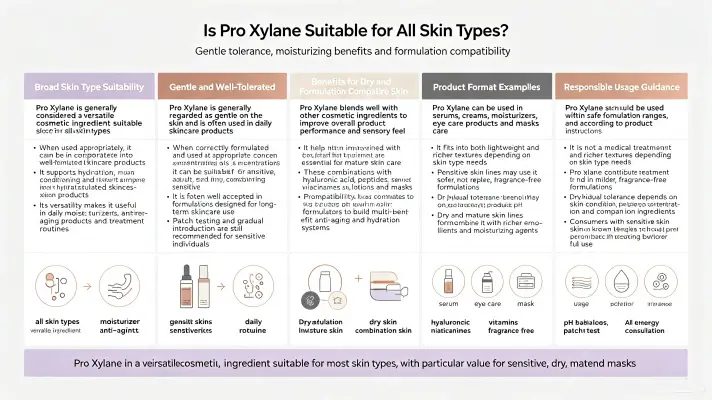
Pro Xylane: Is It Suitable for All Skin Types?
When used in properly made skincare products, Pro Xylane is generally regarded as a flexible beauty ingredient that can be used on all skin types.
Gentle and Well-Tolerated Cosmetic Ingredient
Pro Xylane is a makeup ingredient that is usually thought to be gentle on the skin and is used in products that are meant to be used every day. It can be used on adult, sensitive, dry, combination, or combination skin as long as it is made correctly and in the right amounts. Because it works well with other makeup ingredients, it is often used in anti-aging and moisturizing products today.
Beneficial for Dry and Mature Skin
Because of its moisture-supporting and skin-conditioning qualities, Pro Xylane is highly valued in products for dry or old skin. It helps make skin feel better and look more hydrated, which are important things to look for in skin care routines for older skin.
Compatibility with Other Cosmetic Ingredients
Hyaluronic acid, peptides, niacinamide, and vitamins are some of the other ingredients that are often used with Pro Xylane in skin care products. It usually works well with formulations and is used to improve the overall performance and feel of a product.
Conclusion
To sum up, Pro Xylane is a commonly used active ingredient in cosmetics that helps keep skin hydrated, improves its condition, and makes skin look firmer and more pliable. It is mostly used in decorative skin care products, not as a medical or therapeutic treatment. Its main job in modern skincare is to improve the look of skin quality by supporting water, preparing the extracellular matrix, and working together with other cosmetic actives to make the recipe work better.
Because it works well with a lot of different formulations, Pro Xylane is often chosen by formulators and makers for anti-aging and hydrating product systems. For more technical formulation support or raw material information, please contact us at information@sxrebecca.com.
FAQ
1. What type of cosmetic ingredient is Pro Xylane?
As a manmade cosmetic active ingredient, Pro Xylane is used in skin care products to help keep the skin hydrated and smooth.
2. What kind of ways does Pro Xylane usually get used in formulations?
It is often found in eye care products, creams, serums, and lotions that are meant to make the face look and feel better.
3. Can Pro Xylane be mixed with other chemicals that work?
Yes, hyaluronic acid, peptides, and niacinamide are often added to Pro Xylane to make it work better for skin care generally.
4. Can Pro Xylane be used every day on the skin?
Yes, Pro Xylane can be used in daily skin care products as long as it is mixed with other ingredients in the right amounts.
5. When formulators use Pro Xylane, what should they keep in mind?
When formulators add Pro Xylane to products, they usually look at dosage levels, safety, interaction with other actives, and the skin benefits they want to achieve.
References
1. Bissett, D. L., Oblong, J. E., & Berge, C. A. (2005). Niacinamide: A B vitamin that improves aging facial skin appearance. Dermatologic Surgery, 31(7 Pt 2), 860-865.
2. Narda, M., Peno-Mazzarino, L., Krutmann, J., Trullas, C., & Granger, C. (2021). Novel facial cream containing carnosine inhibits formation of advanced glycation end-products in human skin. Skin Pharmacology and Physiology, 34(1), 5-14.
3. Farwick, M., Köhler, T., Schild, J., Mentel, M., Maczkiewitz, U., Pagani, V., ... & Gallinat, S. (2011). Pentacyclic triterpenes from Terminalia arjuna show multiple benefits on aged and dry skin. Skin Pharmacology and Physiology, 24(2), 63-70.
4. Bonte, F., Dumas, M., Chaudagne, C., & Meybeck, A. (2002). Influence of asiatic acid, madecassic acid, and asiaticoside on human collagen I synthesis. Planta Medica, 68(2), 174-176.
5. Ganceviciene, R., Liakou, A. I., Theodoridis, A., Makrantonaki, E., & Zouboulis, C. C. (2012). Skin anti-aging strategies. Dermato-endocrinology, 4(3), 308-319.