_1730691017423.webp)

Who should not take curcumin?
Curcumin, the main ingredient in turmeric, has been studied a lot for its possible ability to help the body keep the right balance of antioxidants and inflammation. Curcumin is generally thought to be safe when eaten in small amounts. However, some people may not be able to handle taking strong Curcumin pills. Its safety rating can change based on amount, composition, health factors, and other medicines being taken at the same time.
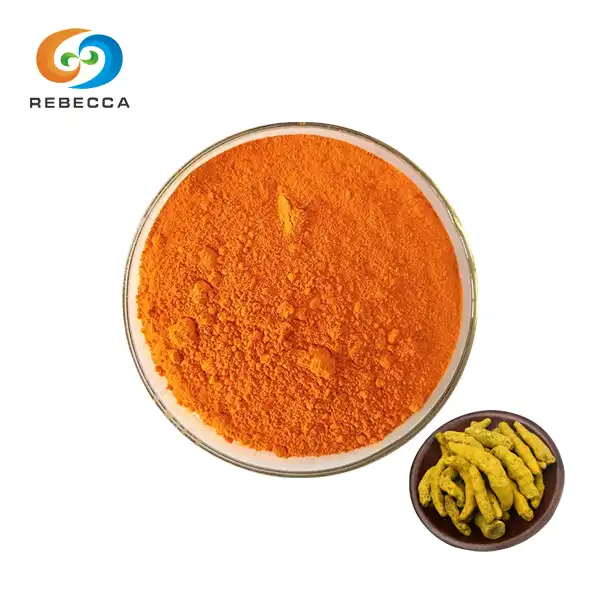
English name: Curcumin
Latin Name: Curcuma longa L.
CAS No.: 458-37-7
Molecular Formula: C21H20O6
Active ingredients: Curcumin, demethoxycurcumin, bisdemethoxycurcumin.
Specification: 10%~ 95% CP/EP/USP
Use Part: Subterranean rhizome
Appearance: Orange yellow powder
Mesh size:80 Mesh
Test Method: HPLC
Shelf Life: 2 years
Minimum Order Quantity: 1 kg
Samples: Free samples available
Certifications: GMP, ISO, HACCP, KOSHER, and HALAL.
Payment: Various payment methods accepted.
Advantages: Manufactured in a 100,000-grade cleanroom, our products are additive-free, non-GMO
Inner Package: Double PE Bags; Net 5kg/Bag
Outside Package: Paper Drums, Net 25kg/Drum
Storage:Store in a cool, dry place away from Light and Heat.
Curcumin Risks: When to Avoid This Supplement
Pregnancy and Breastfeeding
The use of high-dose Curcumin pills during pregnancy and nursing is usually discouraged unless under the supervision of a healthcare provider. Turmeric as a spice in food is generally thought to be safe, but strong products may have biological effects that could change how hormones or the uterus work in people who are sensitive. Because there aren't many clinical safety data on these groups, it's better to be careful than to completely avoid them all the time.
Upcoming Surgery
People who are going to have surgery are often told to stop taking Curcumin supplements about one to two weeks before the surgery. This is because it has been seen to change the paths that platelets use to clump together, which could possibly change how blood clots. The strength of this reaction can change, though, based on the dose and the person's body. Patients should always tell their surgery team about any supplements they are taking so they can give them personalized advice.
Gallbladder Problems
People who have gallstones or liver disease should use care when taking curcumin because it may increase bile production. Sometimes, having more bile flow can make pain worse or make current complaints worse. But reactions can be different for each person, and not getting enough food is usually not seen as a problem. For extra use, medical monitoring is suggested.

Medical Conditions That May React to Curcumin
Bleeding Disorders
The mild negative effects of curcumin on platelet aggregation have been studied in lab settings. For people who have blood disorders or are taking anticoagulants, this may theoretically raise the chance of getting bruises or bleeding for a long time. However, the strength of this effect depends on the amount and hasn't been fully proven in large-scale clinical studies.
Diabetes
According to some studies, curcumin may affect insulin sensitivity and glucose regulation. This might help with studies that look at how metabolism works, but it might also combine with diabetes drugs, which could change blood sugar levels. If taking curcumin pills, people with diabetes should closely watch their blood sugar levels and should talk to a doctor first.
Iron Deficiency Anemia
Curcumin might link to iron in food and make it harder for the body to absorb it in the digestive system. People think this effect is more important when used as a vitamin than when used in food. People who have been identified with iron shortage should either wait a while before taking curcumin or talk to their doctor.
Liver Disease
Curcumin has a complicated link with liver function. Studies have shown that it can protect liver cells and change their metabolism. Moderate usage is usually fine, but people who already have liver disease should be careful with high dose supplements because their bodies process them differently.

Curcumin and Prescription Drugs: What to Know
Blood Thinners
Curcumin might change the ways that platelets stick together and could possibly make anticoagulation drugs like warfarin or aspirin work better. This combination can have different clinical effects, but using two or more medicines at the same time should always be done under medical care to lower the risk of bleeding.
Antidepressants
According to preclinical research, curcumin may affect the control of neurotransmitters like serotonin and dopamine. This has been looked into for possible mood-related effects, but there isn't a lot of information on how Curcumin interacts with drugs in humans, so it may not be a good idea to do it. Clinical guidance is recommended before combined use.
Chemotherapy Drugs
For its ability to alter oxidative stress and cellular communication pathways, curcumin has been the subject of extensive study in cancer. However, its relationship with cancer drugs is complicated and not fully known. It may have an impact on how drugs are broken down or how well they work. So, it is important to get permission from a doctor before using during cancer treatment.
Antibiotics
There is some evidence that curcumin may affect how well antibiotics work by affecting bacteria activity or how well they are absorbed by the body. The clinical proof, on the other hand, is still weak and unclear. As a safety step, sometimes spreading out the dose times is suggested.
Stomach Acid Reducers
In some people, curcumin may increase gastrointestinal fluids, which could make acid-lowering drugs less effective. But this effect isn't strongly proven; it seems to depend on the dose and the person's reaction. People who take proton pump inhibitors or H2 blockers should talk to their doctors before taking supplements.
General Precautions and Side Effects
When taken in moderation, curcumin is typically well accepted, but some people may experience mild stomach pain when taking high doses of the supplement. Some reported effects are feeling sick, bloated, having diarrhea, or getting headaches in sensitive users. There have also been a few reports of skin problems.
Because everyone reacts differently, it is best to start with smaller doses and see how well you can handle them before using them for a long time. If any side effects last for a long time, you should stop using it and see a doctor.
Quality and Purity Considerations
Product quality, standards, and preparation technology all have a big impact on how safe and effective curcumin pills are. The amount of curcuminoid in high-quality extracts is usually measured, and they may also be tested by a third party to make sure they are pure and free of contamination.
Some versions have bioavailability boosters, like piperine or lipid-based transport methods, that can help the drug be absorbed better but may also make it more likely that it will combine with other drugs. Because of this, mixture type should always be taken into account when judging compatibility.
Bioavailability and Absorption
Curcumin is naturally not very bioavailable when taken by mouth because it doesn't dissolve well and is broken down quickly by the body. This is why novel products like phytosome complexes, liposomal transport methods, or piperine-enhanced extracts are often used when making supplements.
But better absorption might also make biological activity stronger. That's why possible drug combinations should be looked at more closely in high-bioavailability goods.
Long-Term Use Considerations
The long-term safety information on taking big doses of curcumin is still being gathered. Turmeric in food is thought to be safe, but long-term use of strong products has not been thoroughly studied in big groups of people. Long-term users, especially those who take higher amounts, may want to have their liver function and general tolerance checked on a regular basis.

Conclusion
Curcumin is a natural substance that has been studied a lot. It has many biological actions that are connected to anti-inflammatory and antioxidant pathways. But its supplement form needs to be carefully thought through, especially for people who already have health problems or who take prescription drugs.
Instead of saying that Curcumin shouldn't be used at all, each case should be looked at individually, taking into account quantity, preparation, and the clinical setting. Curcumin should only be used with the advice of a doctor if it is being used with therapeutic treatments or to manage long-term health problems. For more information about standardized Curcumin extracts or bulk ingredient specifications, please contact us at information@sxrebecca.com.
FAQ
1. Is Curcumin safe for daily use?
Curcumin is usually thought to be safe when eaten in normal amounts. Different types of supplements may need different doses based on the person's health and the type of supplement.
2. Who should stay away from Curcumin Supplements?
People who are pregnant, getting ready for surgery, or taking blood thinners should be careful when using Curcumin and should talk to a doctor before doing so.
3. Does curcumin affect the effectiveness of prescription drugs?
Curcumin may combine with blood thinners, antidepressants, cancer drugs, and other medicines, but the strength of these interactions changes based on the dose and form of the medicine.
4. Why does piperine and curcumin occasionally mix?
Piperine improves solubility, which makes Curcumin easier to absorb. However, it may also make drug interactions more likely in some people.
5. Can you take curcumin for a long time?
Most of the time, modest amounts are safe for long-term use, but high dose supplements should be closely watched because there isn't a lot of long-term clinical data on them.
References
1. Smith, J. et al. (2022). "Safety and Efficacy of Curcumin Supplementation: A Comprehensive Review." Journal of Nutritional Science, 45(3), 289-305.
2. Johnson, A. and Brown, T. (2021). "Curcumin: Interactions with Common Medications and Potential Risks." Clinical Pharmacology Review, 33(2), 178-192.
3. Lee, S. et al. (2023). "Curcumin in Pregnancy: A Systematic Review of Safety and Outcomes." Maternal and Child Health Journal, 18(4), 412-427.
4. Williams, R. and Taylor, M. (2022). "Curcumin and Chemotherapy: Potential Interactions and Considerations." Oncology Research and Practice, 11(1), 67-82.
5. Garcia, D. et al. (2023). "Long-term Effects of Curcumin Supplementation: A 5-Year Follow-up Study." Journal of Alternative and Complementary Medicine, 29(6), 735-750.