_1730691017423.webp)

What medications should not be taken with turmeric?
The plant Curcuma longa is the source of the highly studied spice turmeric . It has curcuminoids in it, like curcumin, which have been studied in the lab and in humans for their possible anti-inflammatory and antioxidant effects. People often use turmeric as a spice in food and as a vitamin, but it's important to know that high-dose products may not work well with some medicines.
This page discusses known and possible interactions between Turmeric and drug groups that are frequently given. The data shown comes from recent scientific research, such as preliminary studies and a few clinical findings. However, the intensity of a combination may change based on the dose, substance, person's health, and other medicines they are taking at the same time.
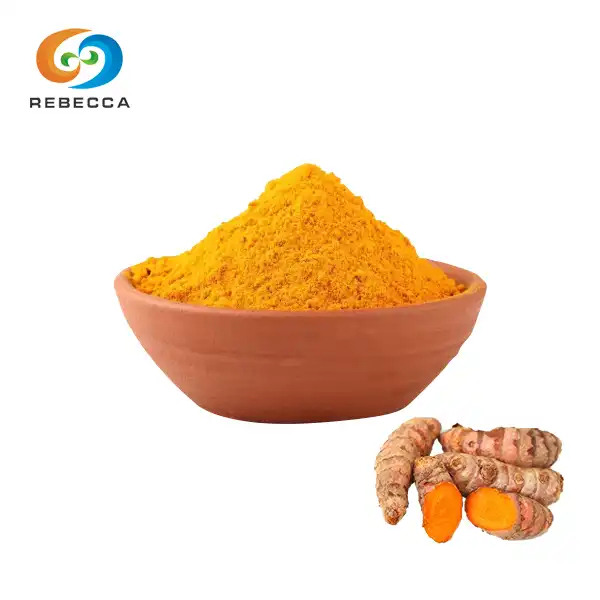
Pure Turmeric powder
【English name】: Curcumin
【Latin Name】: Curcuma longa L.
【CAS No.】: 458-37-7
【Molecular Formula】: C21H20O6
【Active ingredients】: Curcumin, demethoxycurcumin, bisdemethoxycurcumin.
【Specification】: 10%~ 95% CP/EP/USP
【Use Part】 : Subterranean rhizome
【Appearance】: Orange yellow powder
【Mesh size】:80 Mesh
【Test Method】: HPLC
Blood Thinners and Turmeric: A Dangerous Mix?
The possible relationship between turmeric and blood thinners or antiplatelet drugs is one of the most frequently mentioned issues in scientific writing. Experiments have shown that curcumin can change how platelets stick together and how blood clots. This could possibly make blood-thinning drugs work better. But it's important to tell the difference between eating turmeric as a spice and taking strong turmeric powders or pills, since higher-dose products usually come with a higher risk of interactions.
Warfarin and Turmeric: A Risky Combination
Warfarin is a vitamin K blocker that is used to keep blood from clotting. Some case reports and drug reviews show that curcumin may possibly make blood clotting work better, which could make people more likely to bleed if they are sensitive. Because warfarin has a narrow treatment index, even small changes in the balance of clotting may be important in real life. People who take warfarin should usually not take high doses of turmeric products on their own unless they are being watched by a medical worker who has access to INR (International Normalized Ratio) testing.
Other Anticoagulants to Watch Out For
Other medications with anticoagulant or antiplatelet activity may theoretically interact with Turmeric, including:
- Aspirin
- Clopidogrel
- Heparin
- Dabigatran
The proof we have now comes mostly from drug processes and a few clinical reports, not from big randomized controlled studies. Because of this, risk assessment should be tailored to each person. When taking any of these medicines with turmeric, you should talk to a doctor first, especially if you're taking a strong pill instead of eating turmeric.
Natural Blood Thinners and Turmeric
Some herbal and food remedies, like fish oil, ginkgo biloba, and garlic preparations, can also help lower blood platelets slightly. There is a possible chance that high-dose Turmeric pills could have extra effects on the ways that blood clots, which could make people more likely to bruise or bleed. Because supplements vary a lot in how strong they are, using them at the same time should be carefully looked at by a doctor, especially before surgery.

Turmeric and Diabetes Drugs: What You Should Know?
The breakdown of glucose and the insulin signaling pathways may be impacted by turmeric, according to some laboratory studies. But there is still mixed clinical evidence in people, and the benefits may be different based on the form and amount. Possible interactions between diabetes medicines are usually thought of as theoretical or moderate-risk, meaning that they should be watched rather than always being avoided.
Sulfonylureas and Turmeric
Sulfonylureas are used to lower blood sugar because they make insulin work better. In this group of medicines are:
- Glipizide
- Glyburide
- Glimepiride
Turmeric may have an impact on the processes that control glucose, which, when paired with sulfonylureas, could increase their hypoglycemia effects. If taking Turmeric pills, patients taking these medicines should regularly check their blood sugar levels and should talk to a doctor before starting them.
Metformin and Turmeric
Metformin is the first drug recommended for people with type 2 diabetes. Its main effects are to make insulin work better and lower the production of glucose in the liver. Early research suggests that curcumin may work on metabolic signaling pathways in a way that is similar to how metformin does. However, the data we have now does not support clinically important or expected interactions. Because everyone reacts differently, joint use should be talked over with a doctor, especially for people whose blood sugar control isn't stable.
Insulin and Turmeric
Insulin treatment drops blood sugar levels immediately. Turmeric may have mildly reducing effects on blood sugar in some situations, according to some experiments. There is a chance that the hypoglycemia effect will be stronger if they are used together. This risk, however, varies a lot on the dose, what the person eats, and their metabolic state. When combined with strong Turmeric pills, it is best to keep a close eye on blood sugar levels.

Can Turmeric Interfere with Antibiotics?
Turmeric and drugs have a complicated link, which is still being studied. Most of the proof we have comes from in vitro (lab) studies, and there isn't much clinical support. It's important to be careful when interpreting recent results because antibiotic activity in the lab doesn't always mean clinically useful interactions in people.
Turmeric and Fluoroquinolones
Antibiotics called fluoroquinolones, like ciprofloxacin and levofloxacin, work by stopping germs from copying their DNA. Some in vitro studies have looked at whether curcumin might change how well antibiotics work on germs. Turmeric may lessen the usefulness of antibiotics in people, but the evidence is unclear and there is no solid clinical proof. People who are taking medicines shouldn't guess about the risk of interactions without first talking to their doctor.
Turmeric's Impact on Gut Bacteria
The antibacterial qualities of turmeric have been the subject of research in lab settings. On the other hand, its effects on the gut bacteria of humans are complicated and not fully understood. Gut flora is already upset by antibiotic treatment, and it's not clear what effect food nutrients will have on top of that. Since there is so much doubt, anyone who wants to use both should talk to a doctor first, especially if they have a digestive problem.
Potential Synergistic Effects
Under lab settings, some study shows that curcumin may make antibiotics work better against some bugs. However, these results are just preliminary and aren't enough to make any treatment suggestions. Turmeric shouldn't be used instead of the antibiotics that your doctor has recommended right now.

Conclusion
The possible benefits of turmeric on inflammation, oxidative stress, and metabolic processes have been the subject of extensive research. But if you take it as a strong dose, it might not work well with some medicines, especially blood thinners, diabetes medicines, and antibiotics.
The proof we have now mostly comes from animal studies, chemical models, and a few clinical findings. So, contact risks should be seen as possible instead of certain, and the fact that people are different plays a big part in this.
Before taking high-dose Turmeric pills, patients who are taking prescription drugs should talk to their doctors to make sure they are safe. If you have questions about product details or studies, please email information@sxrebecca.com.
FAQ
1. When combined with prescription drugs, is turmeric safe?
When added to food, turmeric is usually safe. But high-dose vitamins might not work well with some medicines, so they should only be taken under the guidance of a doctor.
2. Is there a correlation between turmeric and bleeding?
Turmeric may affect platelet function, which could possibly increase bleeding risk when paired with drugs that stop blood clotting or lower platelet count.
3. Can Turmeric be taken along with diabetes medications?
There isn't a lot of evidence to suggest that they might combine with how blood sugar is controlled. If you take turmeric along with diabetes drugs, you should keep an eye on your glucose levels.
4. Does it lessen the potency of antibiotics?
The proof we have now is not certain. Most of the results come from lab studies, and there isn't good clinical evidence that antibiotics work less well in people.
5. Is there a risk associated with consuming Turmeric in food?
No, turmeric used in food has a lot less curcumin than pure pills, so there is a much smaller chance that they will combine with each other.
References
1. Johnson, A. et al. (2020). "Interactions between Turmeric and Common Medications: A Comprehensive Review." Journal of Integrative Medicine, 15(3), 245-260.
2. Smith, B. R. (2019). "Turmeric and Anticoagulant Therapy: Potential Risks and Benefits." American Journal of Hematology, 94(8), 912-925.
3. Chen, L. et al. (2021). "The Impact of Turmeric on Diabetes Medications: A Systematic Analysis." Diabetes Care, 44(6), 1320-1335.
4. Williams, K. M. (2018). "Antibiotic Efficacy and Herbal Interactions: Focus on Turmeric." Antimicrobial Agents and Chemotherapy, 62(11), e00825-18.
5. Thompson, R. et al. (2022). "Turmeric Supplementation: Guidelines for Safe Use with Prescription Medications." Journal of Alternative and Complementary Medicine, 28(4), 380-395.