_1730691017423.webp)

What is the difference between menthol and WS 23?
Over the years, menthol has been one of the most well-known ingredients used in a wide range of cooling goods. A different way to cool things down in smoking products, food, drinks, and personal care items has been getting more and more attention over the last few years. It's called ws 23 powder. What's the difference between menthol and WS 23 though, and why do businesses pick it for new products? How can these two coolants be used to make things cooler? Let's look at what makes them different.
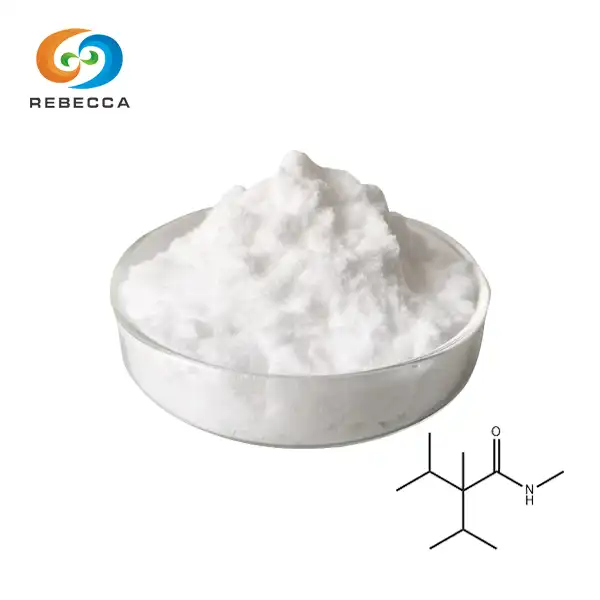
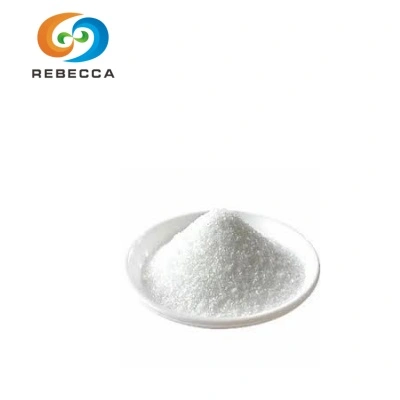
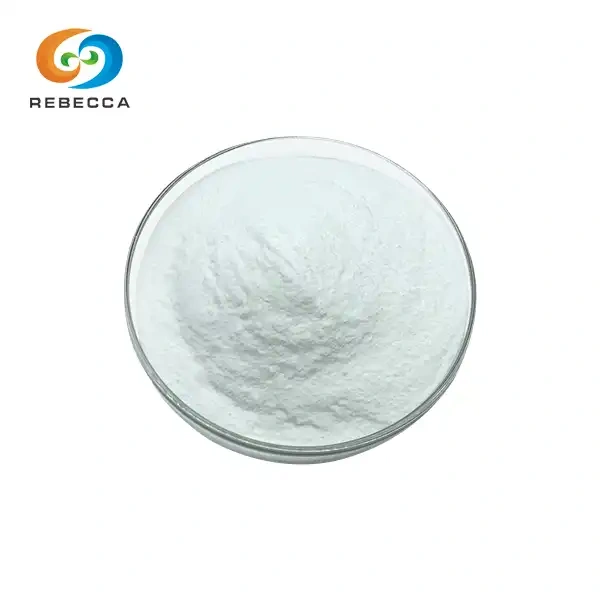
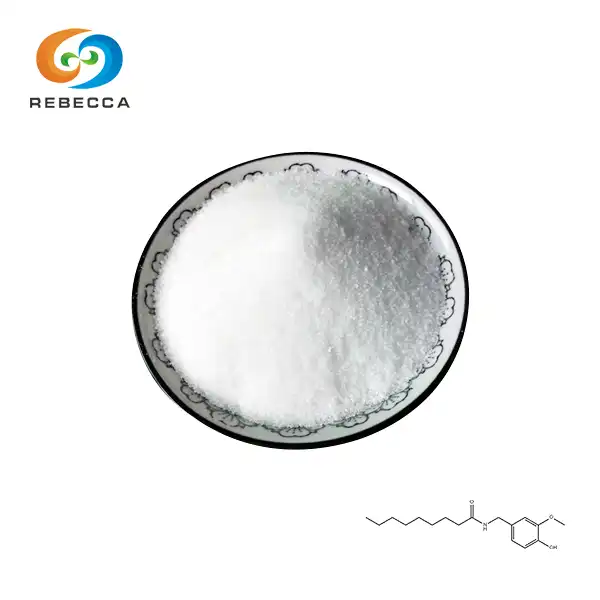
Ws 23 Powder
English name: WS-23 Cooling Agent
CAS No.: 51115-67-4
Molecular Formula: C10H21NO
Active ingredients: 99%
Specification: WS-23, WS-3, WS-5, WS-12.
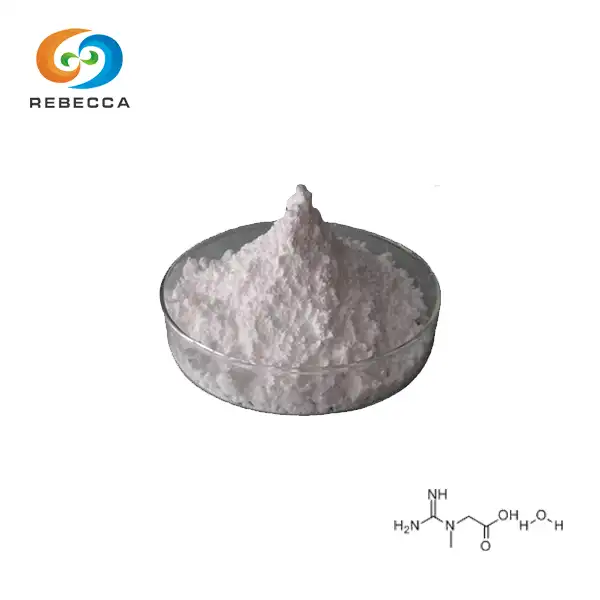
Appearance: White Crystalline Powder
Test Method: HPLC
Certification: MSDS、CE、ISO、COA
How WS 23 powder enhances cooling without flavor?
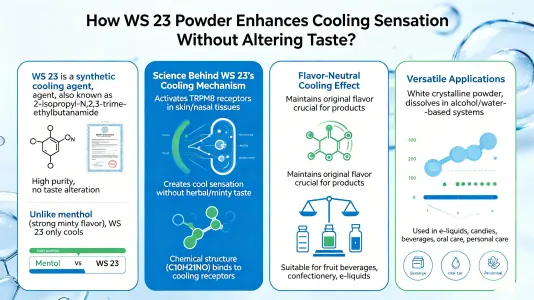
WS 23 is a man-made cooling agent that is also known as 2-Isopropyl-N,2,3-trimethylbutyramide. It is liked for being clean and not changing the taste of things. Instead of cooling and having a strong mint flavor like menthol does, WS 23 powder only cools without changing the taste or smell of the original recipe much.
The science behind WS 23's cooling mechanism
WS 23 works by turning on TRPM8 receptors in the skin and nasal tissues. These receptors are linked to feeling cool temperatures. When these sensors are turned on, they make you feel cool without giving you the herbal or minty taste that most people associate with menthol. WS 23 (C10H21NO) is a common ingredient in sensory-focused products because its chemical structure makes it easy for it to connect with these cooling sensors.
Flavor-neutral cooling
One of the best things about WS 23 powder is that it can cool things down without changing the flavors too much. Because of this, it works especially well in goods where keeping the original taste is important. In fruit-flavored drinks, candies, or vape juices, WS 23 can add a cool feeling that is both refreshing and matches the taste balance that was intended.
Versatility in application
WS 23 is also liked because it can be used in a lot of different ways. It can be used in many different kinds of products because it is a white, crystalline powder that dissolves well in alcohol-based and some water-compatible systems. WS 23 powder is often used by manufacturers to give vape liquids, candies, drinks, mouth care products, and personal care items a stable cooling effect.
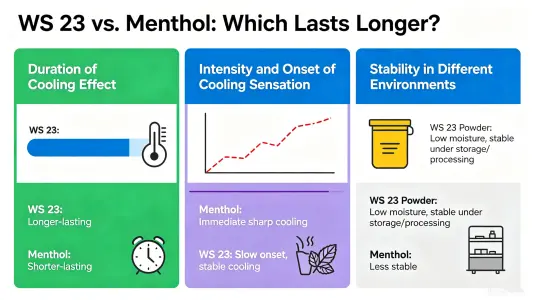
WS 23 vs menthol: Which lasts longer?
In terms of how long the cooling effect lasts, WS 23 powder is often known to provide a cooler, smoother feeling than regular menthol. This longer-lasting taste effect is one reason why WS 23 is being used more and more in current flavor and cooling formulas.
Duration of cooling effect
In some situations, WS 23 may be better at keeping you cool longer than menthol because it lasts longer. When applied, menthol usually has an instant cooling effect that wears off pretty quickly. On the other hand, WS 23 usually has a cooling effect that happens more slowly and lasts longer. This long-lasting effect works especially well in drinks, mouthwashes, and smoking mixtures that are meant to refresh the senses for a long time.
Intensity and onset of cooling
When you breathe in menthol, it usually feels sharp and cool right away, and it tastes like mint. WS 23 on the other hand usually has a smoother start and a better cooling profile that stays more stable over time. This balanced cooling effect gives formulators more options when making goods that need to have managed sense performance.
Stability in different environments
The mixture of WS 23 powder stays stable over a wide range of storage and handling settings. Its low moisture content helps keep products consistent and stable on store shelves, which helps makers keep cooling working reliably in a variety of settings and uses.
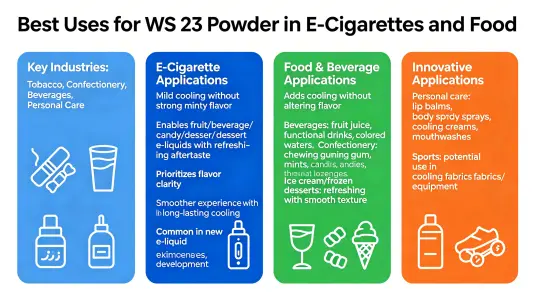
Best uses of WS 23 powder in vape and food
WS 23 is good for many industries, especially smoking, candy, drinks, and personal care products, because it doesn't change the taste of the product and keeps it cool for a long time.
WS 23 in vaping products
In vape mixtures, WS 23 is often used to give a smooth cooling effect without adding a strong mint taste. This lets companies make vape profiles that taste like fruit, drinks, candy, and desserts, with a cool, delicious finish. WS 23 powder is often used in formulas where taste clarity is important because its cooling effect is usually cleaner and more balanced than menthol.
It may also help make the physical experience smoother in some smoking situations because it leaves a cooling feeling that lasts. Because of this, WS 23 is now a commonly used ingredient in the creation of new e-liquids.
WS 23 in food and beverages
WS 23 is often used in the food and drink business to add cooling effects to goods without changing their original flavors too much. WS 23 is often added to fruit drinks, functional drinks, and colored waters by beverage makers to make them taste and feel more refreshing.
When used in sweets, WS 23 powder can be added to gum, mints, candies, and lozenges to make them feel cool for a long time. Manufacturers of ice cream and frozen desserts can also use WS 23 to make their products seem cooler while keeping the smooth taste.
Innovative applications of WS 23
WS 23 is being used more and more in personal care and health goods, as well as smoking and food products. People use WS 23 in lip balms, body sprays, cooling creams, and mouthwash to make their skin feel cool and refreshed without the strong smell that comes with menthol.
Some mouthwashes and creams also use WS 23 to make the cooling profile smoother and the taste experience better. People who work with cooling fabrics and sports may be able to use WS 23 in special goods that help people stay fresh while they work out.
Conclusion
Even though menthol is still a well-known cooling agent, WS 23 powder is becoming more and more popular as a good, flavor-free option in many fields. It can be used in vape products, foods, drinks, and personal care products because it has a smooth cooling profile, a longer-lasting taste effect, and can be mixed with different ingredients in different ways.
Compared to regular menthol, WS 23 has better cooling properties and doesn't have a big effect on taste profiles, which gives makers more options for how to make products. As the need for more advanced sense ingredients grows, WS 23 is likely to stay a key part of future cooling and taste innovations.
Please email us at information@sxrebecca.com if you want to know more about WS 23 powder and how it can be used in industry. For your manufacturing needs, our team can give you more detailed details, help with the product, and information on large supplies.
FAQ
Is WS 23 stronger than menthol?
WS 23 and menthol make you feel different things. Menthol generally has a stronger and faster cooling effect with a mint taste, while WS 23 is typically described as smoother, cleaner, and lasting longer.
Does WS 23 change the taste?
One of the best things about WS 23 powder is that it cools without adding much taste. People who make products often use it when they want to cool them down without changing the taste too much.
In what fields does WS 23 powder get used a lot?
A lot of different things use WS 23 powder, like smoking products, drinks, candy, mouth care products, personal care formulas, and cooling sensory uses.
Should WS 23 be used for making drinks?
Yes, WS 23 is often used in flavored drinks and functional drinks because it can help keep the taste profile while giving you a cool, refreshing feeling.
What should I think about when looking for WS 23 powder?
When choosing WS 23 powder, you should carefully consider things like clarity, production quality, product consistency, technical paperwork, and the dependability of the provider. This will help you get stable formulation performance.
References
1. Johnson, A. et al. (2022). "Comparative Analysis of Cooling Agents in Food and Beverage Applications." Journal of Food Science and Technology, 59(4), 1423-1435.
2. Smith, B. & Lee, C. (2021). "The Rise of WS-23 in the Vaping Industry: A Review of Recent Trends." E-Cigarette and Vaping Studies, 15(2), 87-102.
3. Thompson, R. (2023). "Molecular Mechanisms of Cooling Agents: From Menthol to Modern Alternatives." Chemical Senses, 48(1), 1-15.
4. Garcia, M. et al. (2022). "Consumer Perception of Cooling Sensations in Food Products: A Sensory Evaluation Study." International Journal of Food Properties, 25(3), 512-528.
5. Wong, K. & Patel, S. (2023). "Innovative Applications of Synthetic Cooling Agents in Personal Care and Pharmaceutical Products." Journal of Cosmetic Science, 74(1), 45-60.