_1730691017423.webp)

Lycopene Powder for Food and Cosmetic Applications
lycopene powder, which is produced from naturally red fruits and veggies like tomatoes, watermelon, and pink grapefruit, is now used in many food and beauty products. People are looking for natural vitamins and clean-label ingredients more and more. Lycopene powder has gotten a lot of attention because it stays the same color, is good for you, and might help your face. This article will talk about the best Lycopene powder uses for skin care, its place in food, and important things you should think about when choosing the right product for your needs.
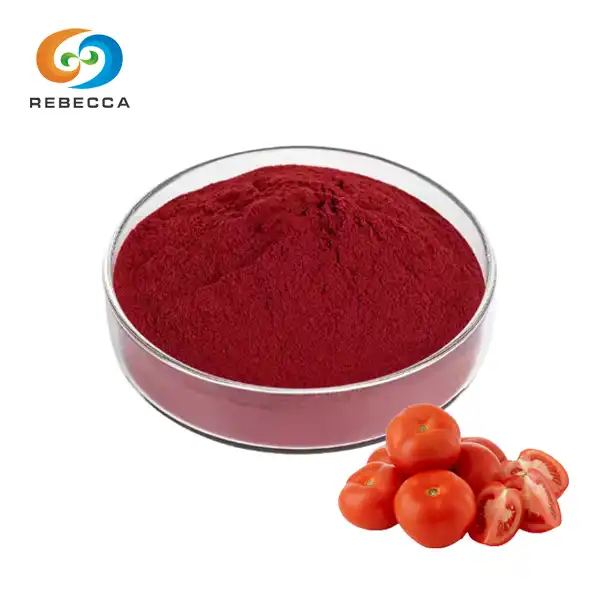
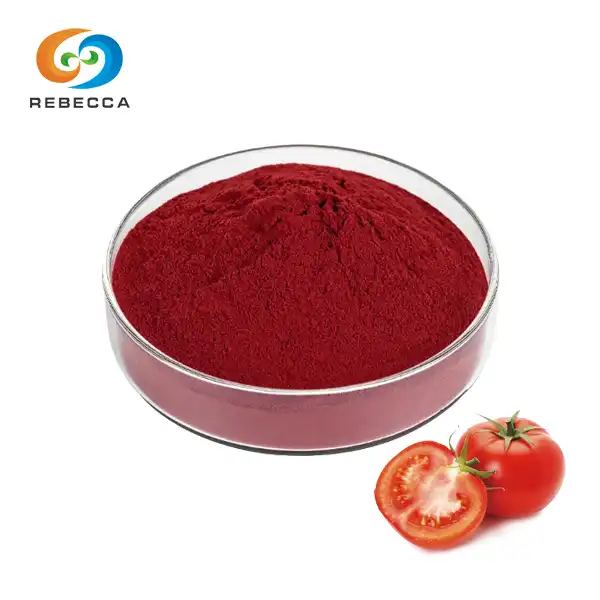
【English name】: Lycopene Powder
【Used part】: Skin
【Particle Size】: 80 mesh
【Active ingredients】: Lycopene
【CAS No.】: 502-65-8
【Molecular Formula】: C40H56
【Molecular Weight】: 536.87
【Specification】: Lycopene 6% and 10%
【Appearance】: Dark Red Powder
【Test Method】:HPLC
Top Benefits of Lycopene Powder in Skincare
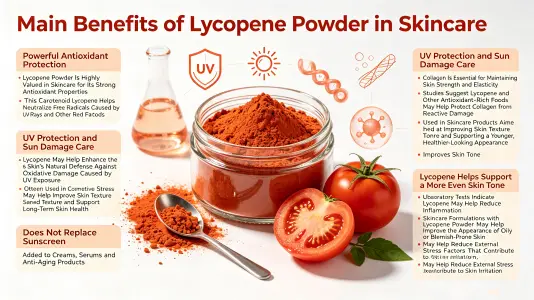
Lycopene powder has become very popular in the skin care business because it is a powerful antioxidant. This carotenoid color is found in large amounts in tomatoes and other red foods. It is good for your skin in many ways, including making it look better.
Powerful Antioxidant Protection
One of the best things about Lycopene powder is that it is a strong antioxidant. Studies show that lycopene may be able to help get rid of free radicals that are made by things like smog and UV light. Because it lowers reactive stress, lycopene may help skin look better and help keep it healthy over time.
UV Protection and Sun Damage Repair
Lycopene may help the skin's natural defense against oxidative damage caused by UV light, according to research. Lycopene is often found in cosmetics that are meant to help skin that is exposed to sunshine, but it is not an alternative for sunscreen. Because of this, a lot of skin care companies put Lycopene powder into creams, serums, and anti-aging items.
Collagen Production Support
Collagen is very important for keeping skin strong and flexible. Some researches show that Lycopene and other antioxidant-rich foods may help protect collagen from reactive damage. Because of this, Lycopene powder is being used more and more in skin care items that aim to make skin look better and younger.
Skin Tone Improvement
Uneven skin tone can be caused by oxidative stress and exposure to the environment. Lycopene may help your skin look better and more even-toned because it is an antioxidant. It is often found in cosmetics that aim to improve skin tone, redness, and general glow.
Acne Management
In lab tests, lycopene has also been shown to help reduce inflammation. Ingredients in skin care products that contain Lycopene powder may help people with oily or acne-prone skin look better by lowering external stress factors that cause skin inflammation.
How Lycopene Powder Enhances Food Products?
Lycopene powder has become a well-liked ingredient in the food business in addition to its uses in skincare. Due to its natural flavor and nutritional value, it is a good choice for adding to many food and drink items.
Natural Food Coloring
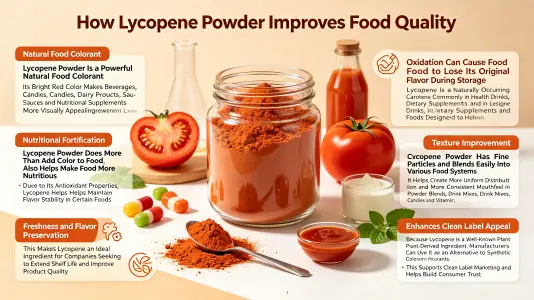
Lycopene powder is a powerful natural food coloring agent. It can make drinks, sweets, dairy products, sauces, and nutritional supplements look better because of its bright red color. Lycopene has become a popular choice for clean-label product development as more and more people prefer natural options to manmade chemicals.
Nutritional Fortification
Lycopene powder can do more than just color food. It can also make food healthier. Lycopene is a naturally occurring carotene that is often found in health drinks, dietary supplements, and useful foods that are made to help people get enough antioxidants.
Flavor Preservation
Oxidation can make flavors less good while they're being stored. Lycopene may help keep flavors stable in some food uses because it is an antioxidant. Because of this, it is a useful material for companies that want to make their products last longer and be of higher quality.
Texture Enhancement
Lycopene powder can be easily mixed into a wide range of food systems because its particles are very small. Lycopene can help make powder blends, drink mixes, sweets, and vitamin goods more evenly distributed and consistent.
Clean Label Appeal
These days, people read chemical labels more and more before buying things. Manufacturers can use lycopene powder instead of synthetic colors because it is a well-known ingredient that comes from plants. This helps with clean-label marketing and building customer trust.
Choosing the Best Lycopene Powder for Your Needs
Choosing the right Lycopene powder is very important for getting the best results in food and skin care. When picking a Lycopene powder provider or product standard, think about the following things.
Source and Purity
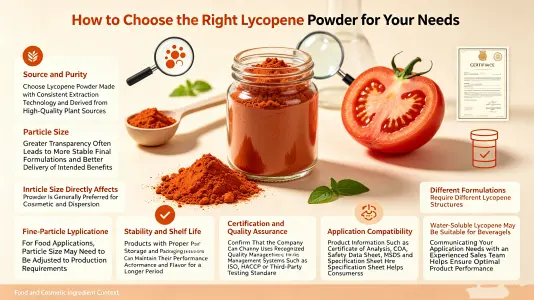
Select lycopene powder that is made using uniform extraction techniques and comes from high-quality plant sources. Higher levels of clarity often make finished formulations more consistent and better at what they're supposed to do.
Particle Size
Particle size has a direct effect on how well a product works and how well it disperses. For makeup formulas, fine lycopene powder is usually favored, but for food uses, the particle size may need to be changed to fit the needs of the production.
Stability and Shelf Life
Lycopene changes when it comes in contact with air, heat, and light. If you choose a product that comes with instructions on how to store and package it properly, it will keep its strength and flavor longer.
Certification and Quality Assurance
When looking for Lycopene powder, make sure the company uses well-known quality systems like GMP, ISO, HACCP, or testing standards set by a third party. Product information like COAs, MSDSs, and specification sheets can help people decide what to buy even more.
Compatibility with Your Application
For each mixture, a new Lycopene structure is needed. Grades that dissolve in water might work for drinks, while forms that dissolve in oil are usually better for cosmetics and softgels. Talking to a skilled seller about application needs can help make sure that the product works at its best.
Conclusion
In both the food and beauty businesses, lycopene powder has many benefits. It is becoming more and more popular as an ingredient in new cosmetic, nutrition, and functional food items because it can be used as a natural color and can be mixed in a lot of different ways. Lycopene is still being looked at by global brands and formulators, whether it's to back claims about clean labels, product looks, or antioxidants.
We, Shaanxi Rebecca Biotechnology Co., Ltd., offer solid standards, tight quality control, and full expert support for our high-quality Lycopene powder. For companies around the world, we also offer OEM services, special formulas, large supply options, and export paperwork. For information about our products, samples, quotes, or technical help, please email us at information@sxrebecca.com.
FAQ
What is the most typical application for lycopene powder?
Due to its protective qualities and natural red color, lycopene powder is used extensively in dietary supplements, functional foods, drinks, beauty products, and makeup formulas.
Is lycopene powder appropriate for use in skincare?
Because of its antioxidant and skin-supporting properties, lycopene powder is frequently added to creams, serums, lotions, and anti-aging formulas.
What is Lycopene powder? Can it be used as a natural food color?
Yes, lycopene is a natural red colorant that can be used instead of artificial colorants in drinks, candy, dairy products, sauces, and nutritional supplements.
How should I keep lycopene powder?
To keep its safety and usefulness, lycopene powder should be kept in a cool, dry location out of direct sunlight, heat, and moisture.
What should people looking for a Lycopene powder provider look for?
Buyers should look at how pure the product is, what licenses the manufacturer has, what testing standards are in place, what technical paperwork is available, how much the provider can produce, and whether they can offer OEM and bulk supply services.
References
1. Johnson, E. J. (2019). "The role of carotenoids in human health." Nutrition in Clinical Care, 7(2), 56-65.
2. Smith, A. B., & Jones, C. D. (2020). "Lycopene: A Review of Its Nutraceutical Properties and Applications in Food and Cosmetics." Journal of Functional Foods, 75, 104205.
3. Brown, M. K., & Evans, R. L. (2021). "Antioxidant Properties of Lycopene in Skincare Formulations." International Journal of Cosmetic Science, 43(3), 298-307.
4. Garcia-Alonso, F. J., & Periago, M. J. (2018). "Lycopene as a Natural Food Colorant and Its Stability During Processing." Food Science and Technology International, 24(5), 432-442.
5. Thompson, K. L., & Wilson, P. R. (2022). "Advances in Lycopene Extraction and Formulation for Enhanced Bioavailability." Trends in Food Science & Technology, 120, 123-135.