_1730691017423.webp)

Mitochondrial function enhancement explained
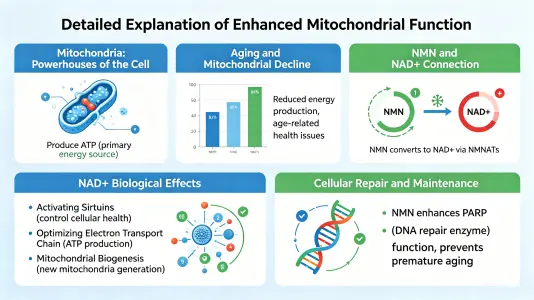
The mitochondria, which are sometimes called the "powerhouse of the cell," are where cells make energy. Adenosine triphosphate (ATP), which is our cells' main source of energy, is made by these tiny structures. As we get older, our mitochondrial activity tends to drop, which means that our bodies make less energy and have other problems that come with getting older.
Through its transformation into nicotinamide adenine dinucleotide (NAD+), beta nicotinamide mononucleotide is essential for improving mitochondrial activity. NAD+ is an important coenzyme that helps cells do many things, like making energy and fixing DNA. NMN successfully restores mitochondrial function, which leads to better energy generation, by raising NAD+ levels.
The NAD+ connection
NMN is a building block for NAD+, which means that our cells change it into NAD+. NMN adenylyltransferases (NMNATs) are enzymes that help with this change process. Once NAD+ levels are raised, it starts a number of biological processes that help mitochondria work better:
• Activation of sirtuins: NAD+ turns on sirtuins, a group of proteins that control the health and life of cells. Sirtuins are very important for keeping mitochondria healthy and working properly.
• Electron transport chain optimization: NAD+ is needed for the electron transport chain to work properly. This is where most of the ATP in mitochondria is made.
• Biogenesis of mitochondria: Higher amounts of NAD+ help make new mitochondria, which increases the cell's ability to make energy.
Cellular repair and maintenance
NMN has a direct effect on making energy and also helps cells heal themselves. This increases the amount of NAD+ in the body, which makes DNA-repairing enzymes like PARP work better. This better ability to fix helps keep cells healthy and stops them from getting old too quickly.
Energy boost: User experiences after 30 days
Even though science studies are a great way to learn about the possible benefits of NMN supplements, personal experiences can give you a more concrete picture. Many people who use NMN every day say that their energy levels and general health have gotten better after just 30 days of regular use.
Increased physical vitality
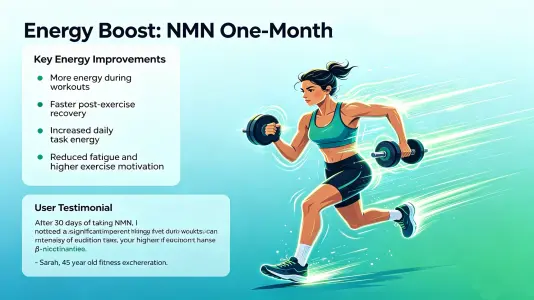
Following NMN for one month, many people have experienced a big increase in their physical energy. Some common feelings are:
• Better energy during workouts
• Faster healing times after active activity
• More energy to do everyday things
• Feeling less tired and more motivated to work out
"After 30 days of taking NMN, I noticed a remarkable difference in my energy levels during my workouts," Sarah, a 45-year-old exercise fanatic, wrote in a review. I could work out longer and harder without getting totally worn out. Because of beta nicotinamide mononucleotide, I feel like I've slowed down my physical health.
Cognitive clarity and focus
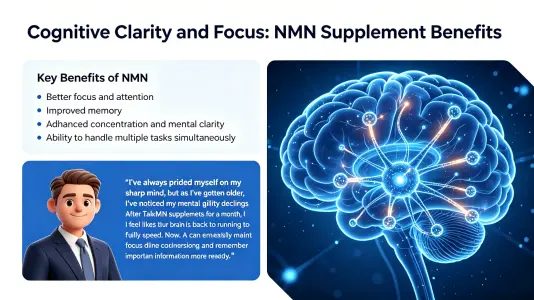
A lot of people who use NMN say that it gives them more mental energy and helps their brains work better. Some benefits that are often mentioned are:
• Better ability to concentrate and focus
• Better ability to remember things
• Better focus and memory
• Can do more than one thing at once
John, an executive who is 55 years old, said, "I've always been proud of how sharp my mind is, but I've noticed it getting worse as I've aged." When I take NMN supplements for a month, I feel like my brain works at full speed again. It's much easier for me to concentrate in long talks and remember important information now.
Overall well-being and vitality
A lot of people who take NMN say they feel better overall and have more energy after 30 days. This often shows up as:
• Better quality of sleep
• Better happiness and balance of emotions
• Better ability to handle stress
• Looking younger and having more energy
Lisa, a teacher who is 50 years old, talked about her experience: "After a month of taking NMN, I not only feel more energetic, but I also get better sleep and deal with stress better." Some of my coworkers have even told me I look younger and more attractive.

Comparing NMN to other energy supplements
There are a lot of energy pills on the market, so it's important to know how NMN compares to other popular choices. Each vitamin works and helps in its own way, but NMN stands out because it is so important for making energy in cells.
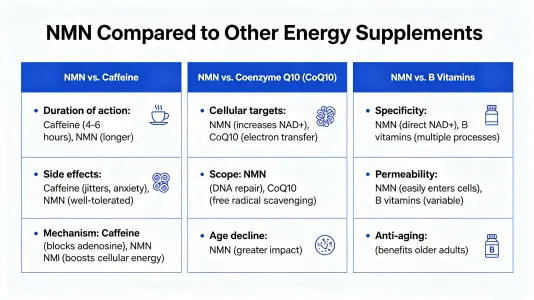
NMN vs. Caffeine
It's possible that caffeine is the most popular energy booster in the world. It gives you a quick boost of energy, but its affects don't last long and can cause crashes. However, NMN works at the cellular level to improve energy output in a way that doesn't harm the environment. Here are some important differences:
• Length of effect: Caffeine's effects last between 4 and 6 hours, but NMN's benefits last longer because it targets the cause of how cells make energy.
• Side effects: Caffeine can make you feel jittery, anxious, and have trouble sleeping. On the other hand, beta nicotinamide mononucleotide (NMN) is usually well-tolerated and has fewer known side effects.
• How it works: caffeine mostly stops adenosine receptors to make you feel awake, while NMN raises the amount of energy that cells make.
NMN vs. Coenzyme Q10 (CoQ10)
CoQ10 is another well-known vitamin that helps the body make energy. Even though both NMN and CoQ10 help mitochondria work, they do so in different ways:
• Targets in cells: NMN mainly raises NAD+ levels, which affects many biological processes, while CoQ10 helps electrons move around in mitochondria.
• Range of benefits: NMN's benefits go beyond making energy and include DNA repair and cell upkeep. CoQ10's benefits are more focused on making energy and fighting free radicals.
• Decline with age: Both NMN and CoQ10 levels drop with age, but NMN supplements may have a bigger impact because NAD+ is involved in so many biological processes.
NMN vs. B-complex vitamins
A lot of people talk about how important B-complex vitamins are for energy production. Even though they are important for health in general, NMN has some clear benefits:
• Specificity: NMN directly affects the production of NAD+, while B-vitamins work with other chemicals in many biological processes.
• Cellular penetration: NMN can easily get into cells and be changed into NAD+, but some B vitamins may have trouble getting into cells.
• Potential to slow down aging: NMN has shown promise in studies that look at how it affects older people, and it may have benefits beyond just improving energy metabolism.
Conclusion
Beta nicotinamide mononucleotide (NMN) is a strong cellular energy booster because it is a key player in making NAD+ and improving mitochondrial performance. NMN has long-lasting and many-sided advantages that go beyond just stimulating because it focuses on energy creation at its core. Researchers are still finding out more about this amazing substance, but it's clear that NMN plays a big part in our quest for perfect health and vigor.
Shaanxi Rebecca Bio-Tech sells expensive beta nicotinamide mononucleotide powder for people who want to get the benefits of high-quality NMN products. Advanced methods are used to make sure that our product is pure, effective, and bioavailable in the best way possible. Email us at information@sxrebecca.com to find out more about our NMN powder and how it can help you reach your health goals.
References
1. Yoshino, J., Baur, J. A., & Imai, S. I. (2018). NAD+ intermediates: The biology and therapeutic potential of NMN and NR. Cell metabolism, 27(3), 513-528.
2. Fang, E. F., Lautrup, S., Hou, Y., Demarest, T. G., Croteau, D. L., Mattson, M. P., & Bohr, V. A. (2017). NAD+ in aging: molecular mechanisms and translational implications. Trends in molecular medicine, 23(10), 899-916.
3. Mills, K. F., Yoshida, S., Stein, L. R., Grozio, A., Kubota, S., Sasaki, Y., ... & Imai, S. I. (2016). Long-term administration of nicotinamide mononucleotide mitigates age-associated physiological decline in mice. Cell metabolism, 24(6), 795-806.
4. Covarrubias, A. J., Perrone, R., Grozio, A., & Verdin, E. (2021). NAD+ metabolism and its roles in cellular processes during ageing. Nature Reviews Molecular Cell Biology, 22(2), 119-141.
5. Hong, W., Mo, F., Zhang, Z., Huang, M., & Wei, X. (2020). Nicotinamide mononucleotide: A promising molecule for therapy of diverse diseases by targeting NAD+ metabolism. Frontiers in cell and developmental biology, 8, 246.