_1730691017423.webp)

What does propolis extract do for skin?
Propolis extract, a wonderful substance that comes from beehives, has gotten a lot of attention in the skin care world because it has so many benefits. This natural material, which is sometimes called "bee glue," is a sticky mix that bees get from tree buds, sap flows, and other plants. The possible skin-benefiting qualities of propolis extract, which is high in flavonoids, phenolic acids, and other naturally occurring substances, have been extensively studied. Although study is still going on, it is often used in cosmetics to help keep skin healthy. This article talks about the supposed skin health benefits of the best propolis extract ,, how to pick a good product, and how it might help with common face problems like acne and itching.
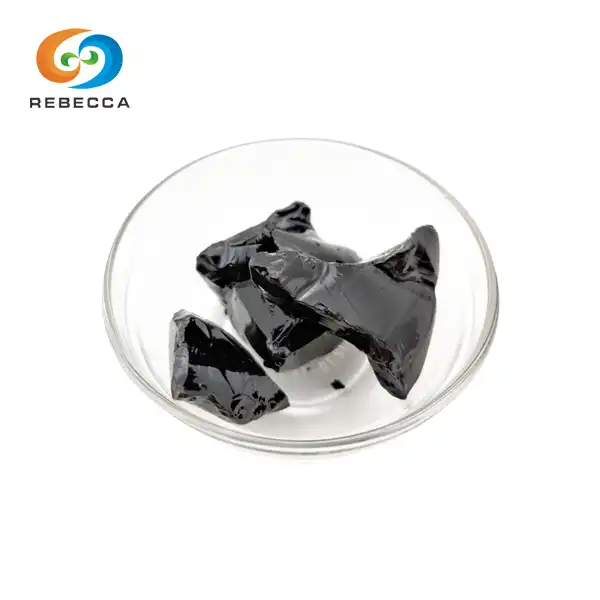
Pure Propolis Extract
【English name】: Propolis
【Active ingredients】: raw bee propolis
【Propolis Content 】: 98%
【Total Flavonoids Content 】98%, 22% flavonoids
【Smell】 :Little Honey Scent
【Appearance】: Dark brown solid
Shelf Life: 2 years
Minimum Order Quantity: 1 kg
Samples: Free samples available
Certifications: GMP, ISO, HACCP, KOSHER, and HALAL.
Payment: Various payment methods accepted.
Advantages: Manufactured in a 100,000-grade cleanroom, our products are additive-free, non-GMO
Inner Package: Double PE Bags; Net 5kg/Bag
Outside Package: Paper Drums, Net 25kg/Drum
Storage:Store in a cool, dry place away from Light and Heat.
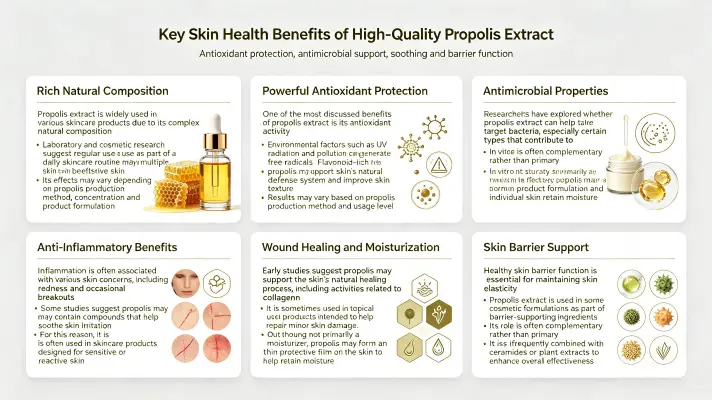
Top Benefits of Best Propolis Extract for Skin Health
Because it has so many different ingredients, propolis extract is used in many skin care products. Studies done in the lab and on cosmetics show that using it regularly as part of a skin care routine may have a number of benefits for the skin.
Potent Antioxidant Protection
The antioxidant action of propolis extract is one of the things that people talk about the most. Free radicals are made by things like UV light and smog in the surroundings. Antioxidants help get rid of them. Some studies show that propolis, which is high in flavonoids, may help the skin's natural defense system. This could make the skin look better over time. But the amount of effect may be different based on how it is made and how much of it is used.
Antibacterial and Antimicrobial Action
Researchers have looked into whether propolis extract can kill bacteria, especially some types of bacteria that cause skin imbalances. This ingredient is often found in skin care items to help keep the face clean. In vitro study looks good, but how well it works in real life may rest on how the product is made and how each person's skin reacts.
Anti-inflammatory Effects
Inflammation is often linked to a number of skin problems, such as redness and rare breakouts. Some study suggests that propolis may have chemicals in it that can help soothe skin problems. Because of this, it is often found in goods made for skin that is delicate or reacting.
Wound Healing Support
Early study shows that propolis may help the skin's natural healing process, which includes activities linked to collagen and cell growth. Most of these results come from lab or small-scale studies, so the way they work in cosmetics may be different. It is sometimes used in topical products meant to help skin heal from small damage.
Hydration Boost
The formation of a thin layer of protection on the skin by propolis extract, despite the fact that it is not mainly a humectant, may help support skin moisture retention. When mixed with other moisturizing ingredients like glycerin or hyaluronic acid, this can help stop moisture loss.
Enhanced Skin Barrier Function
For skin to stay resilient, it needs a good skin layer. As part of barrier-supporting mixes, propolis extract is used in some makeup formulas. Its function is more of a support than a main one, and it is often mixed with ceramides or plant products to make them work better.
How to Choose the Best Propolis Extract for Your Skin?
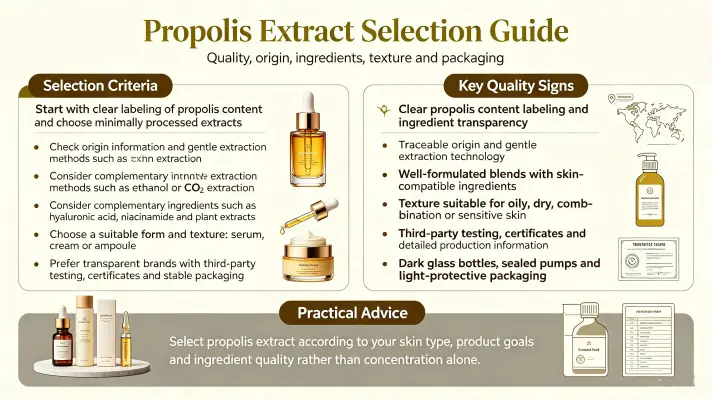
As more skin care products use propolis, there can be big differences in quality. Picking the best propolis extract relies on how clear the recipe is, where the ingredients come from, and how well they work with your skin type.
Concentration and Purity
It's usually easier to judge the quality of products that make it clear how much propolis they contain. But sometimes a stronger dose doesn't mean better results, especially if you have sensitive skin. To keep the variety of natural compounds, makeup formulas often choose extracts that have been treated as little as possible.
Source and Extraction Method
The quality of propolis depends on where it comes from and how it is extracted. To better protect organic substances, some companies use kinder methods like ethanol extraction or CO2 extraction. Clear details about where the information came from is usually a good sign of quality.
Additional Ingredients
Propolis is often mixed with other ingredients used in skin care products. Hyaluronic acid, niacinamide, and plant products are often mixed together. Depending on how well they work with your skin and how well the ingredients work together, these combos may make the product work better overall.
Form and Texture
There are different kinds of the best propolis extract items, like serums, creams, and ampoules. Texture choice is a big part of how often you use an ingredient, which is important for any skin care product to work over time.
Brand Reputation and Transparency
Brands that give a lot of information about where their ingredients come from, how they're made, and how they check the quality of their products are usually more trustworthy. Having a product tested or certified by a third party can also make it seem more trustworthy.
Packaging
Using the right packaging helps keep the ingredients stable. To keep plant chemicals from breaking down due to rust and light, airtight pumps and dark glass cases are often used.
Does Propolis Extract Help with Acne and Skin Irritations?
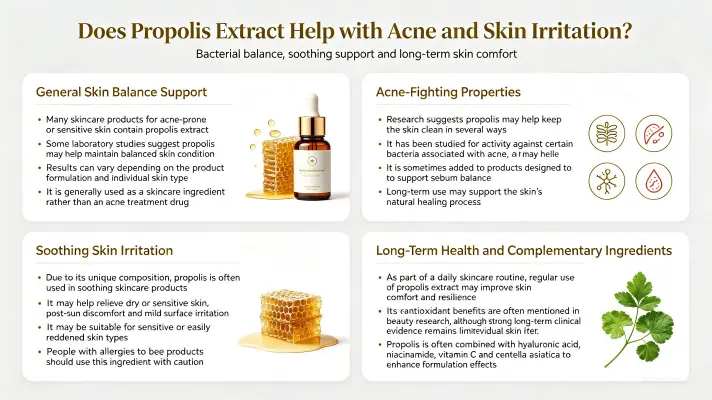
A lot of skin care items for acne-prone or sensitive skin contain propolis extract. Some lab studies show that it might have qualities that help keep the skin balanced, but the results can be different based on the product and the person's skin state.
Acne-Fighting Properties
According to research on propolis, it may help keep skin clear in a number of ways:
- It has been looked at to see if it might work against some bacteria that cause acne.
- It might help some people with obvious skin redness.
- It is sometimes added to products that are meant to help keep sebum balance.
- Over time, it may help the skin's natural healing process.
It's important to remember that propolis is not a medical way to treat acne, and different people may have different effects.
Soothing Skin Irritations
Because of how it is made, propolis is often found in skin-calming goods. It might help make you feel better for:
- Skin that is dry or sensitive sometimes
- Pain after being in the sun (use for facial healing)
- Slight skin soreness on the surface
- Skin types that are sensitive or prone to redness
But people who are allergic to bee products should be careful.
Long-Term Skin Health
When used regularly as part of a skin care practice, propolis extract may help make skin more comfortable and stronger. In beauty studies, its antioxidant content is often emphasized, but there isn't a lot of long-term clinical proof yet.
Complementary Skincare Ingredients
Propolis is often mixed with other ingredients to make formulations work better:
- Hyaluronic acid: helps keep the body's water balance
- Niacinamide: helps make skin look and feel better
- Vitamin C: helps protect cells from damage
- Centella Asiatica: often used to make skin care products more soothing
Conclusion
Propolis extract is a natural ingredient that is used a lot in modern skin care products because it can do many things. While more research is being done, studies that have already been done and cosmetic uses show that it may have antioxidant, healing, and skin-supporting properties. Picking a well-made product is still important if you want to get regular results from the best propolis extract.
When choosing propolis-containing skin care products, people who want natural ingredients should always think about the quality of the product, how clear the mixture is, and how well it works with their skin.
If you're looking for the best propolis extract and other natural plant extracts, Shaanxi Rebecca Biotechnology Co., Ltd. has a selection of high-quality goods that are backed by strict quality control measures during production. To learn more about our offerings, please contact us at information@sxrebecca.com.
FAQ
1. What is the best propolis extract used for in skincare?
It is often included in skin care products to help with skin health, antioxidant defense, and comfort. It's not a medicine; it's an ingredient in beauty products.
2. Can propolis extract help skin that gets acne?
Some studies show that propolis may help keep your skin cleaner and less irritated, but the results depend on your skin type and the way the product is made.
3. Is it okay for sensitive skin to use propolis extract?
People who are allergic to bees or pollen should do a patch test before using it on their skin, but most people can handle it.
4. How long does it take for propolis skin care products to work?
Results are different based on how it is made and how often it is used. Most ingredients used in cosmetics need to be used regularly for a few weeks before you can see changes.
5. Can propolis extract be used instead of acne medicine?
No, propolis is an ingredient in cosmetics and shouldn't be used instead of acne treatments recommended by a doctor.
References
1. Johnson, A. et al. (2021). "Propolis Extract: A Comprehensive Review of Its Skin Benefits and Applications in Dermatology." Journal of Clinical Dermatology, 45(3), 278-295.
2. Silva-Carvalho, R., Baltazar, F., & Almeida-Aguiar, C. (2015). "Propolis: A Complex Natural Product with a Plethora of Biological Activities That Can Be Explored for Drug Development." Evidence-Based Complementary and Alternative Medicine, 2015, 206439.
3. Lee, K. S., et al. (2019). "Propolis: A Promising Natural Product for Various Skin Diseases." International Journal of Molecular Sciences, 20(17), 4264.
4. Morawiec, T., et al. (2019). "The Biological Activities of Propolis and Its Application in Skin Care." Molecules, 24(24), 4544.
5. Pasupuleti, V. R., et al. (2017). "Honey, Propolis, and Royal Jelly: A Comprehensive Review of Their Biological Actions and Health Benefits." Oxidative Medicine and Cellular Longevity, 2017, 1259510.