_1730691017423.webp)

The Science Behind Synthetic Curcumin and Its Anti-Aging Benefits
Many cellular and chemical changes happen in our bodies as we get older. These changes cause lines, age spots, and loss of skin flexibility. Aging is a normal biological process that can't be stopped totally. However, dermatology and molecular biology study has found a number of substances that may help skin age more healthily by affecting oxidative stress, inflammation, and the way cells fix themselves. A substance called synthetic curcumin ,which is made in a lab and is similar to the main ingredient in turmeric, has gotten a lot of attention in lab studies.
This piece will talk about what scientists know now about how synthetic curcumin interacts with cellular pathways linked to aging. It will also recap its suggested methods of action and go over how it is usually made for use in skin care and supplements. Early study in the lab and on preclinical models looks hopeful, but there isn't a lot of clinical evidence on humans yet, so it's important to be careful about what it means.
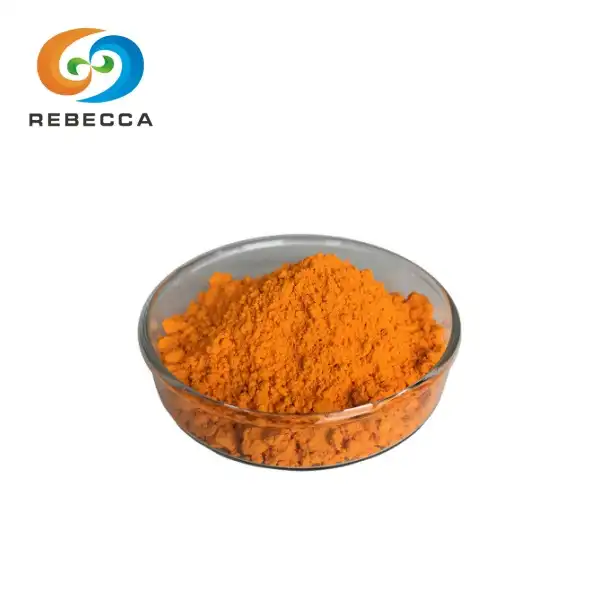
Synthetic Curcumin
【English name】: Synthetic Curcumin
【CAS No.】: 458-37-7
【Molecular Formula】: C21H20O6
【Active ingredients】: Synthetic Curcumin
【Specification】: Synthetic Curcumin 98%
【Appearance】: Yellow-Orange powder
【Melting Point】183 ℃
【Water soluble】Slightly soluble
【Stability】Stable, but may be light sensitive. Incompatible with strong oxidizing agents.
【Applying】Mainly used in antitumor drugs.
How Synthetic Curcumin Slows Aging at the Cellular Level?
To understand how synthetic curcumin might affect biological aging processes, it helps to first look at the main cellular processes that scientists usually link to getting older. Some of these are:
- Oxidative stress and the buildup of free radicals
- Low-level inflammation that doesn't go away
- Over time, telomeres get shorter.
- Loss of mitochondrial efficiency
- Building up DNA damage and a lower ability to fix it
There are many things that can cause you to age, and no one chemical has been shown to fully stop it. However, studies done in the lab show that synthetic curcumin may affect more than one of these processes at the same time, mostly by changing the way antioxidants work and how inflammation is handled.
Neutralizing Free Radicals
In vitro (cell-based) studies have been done on synthetic curcumin to look at its antioxidant qualities. Reactive oxygen species (ROS) are unstable chemicals that can damage lipids, proteins, and DNA in cells. Antioxidants help get rid of ROS. Curcumin compounds have been shown to lower oxidative stress markers in lab settings that are controlled. It is important to note, though, that antioxidant activity seen in cell tests doesn't always apply straight to the human body because of changes in how things are absorbed, broken down, and used.
Reducing Chronic Inflammation
Chronic inflammation, which is sometimes called "inflammaging" in scientific writing, is thought to be one of the reasons why tissues break down with age. According to research, curcumin molecules may change inflammation signaling pathways, such as those that involve cytokines and enzymes like COX-2 in lab animals. Researchers are looking into synthetic curcumin to see if it is more stable and bioavailable than natural curcumin. This could possibly make it more biologically active. But there isn't a lot of clinical evidence in people yet, and the effects rely on the preparation and dose.
Activating Cellular Stress Response Pathways
Nrf2 (nuclear factor erythroid 2–related factor 2) is one of the curcumin routes that has been studied the most. This route controls how antioxidants and detoxifying enzymes are made in cells. Preclinical studies show that curcumin analogs may trigger Nrf2 signaling, which could make cells better able to fight oxidative stress. This process makes scientific sense, but most of the data we have right now comes from studies on animals or cells, not large-scale trials with humans.
Supporting Mitochondrial Function
Cells get their energy from mitochondria, and problems with mitochondria are often linked to getting older. Some lab tests show that versions of curcumin may help lower oxidative damage in mitochondria and improve the efficiency of ATP production. But the effects of mitochondria on people are still being studied, and the results we have now should be thought of as preliminary.
Promoting DNA Repair
DNA harm builds up over time, which is a known sign of aging. According to study done in the lab, curcumin may change some DNA repair enzymes and processes that help keep the genome stable. It is important to note that while molecular interactions have been seen in experiments, there is not yet enough clinical data to prove that synthetic curcumin supplements or external use have a direct "DNA repair enhancement" effect on people.
Modulating Senescence Pathways
Senescence of the cells means that they are no longer growing but are still metabolically active. Senescent cells are linked to inflammation and tissues that are getting old. Early study shows that curcumin molecules may change communication pathways related to aging. But this field of study is still young, and no solid results have been reached about how it works in people yet.

Top Anti-Aging Benefits of Synthetic Curcumin
The following possible benefits come from a mix of lab results, early-stage study, and ideas about how biological systems work. There is still not a lot of clinical evidence on humans, and effects may be very different based on the product and the person's skin type.
Reduced Fine Lines and Wrinkles
Oxidative stress is one of the things that makes collagen break down in skin. Synthetic curcumin may indirectly support skin structure integrity by lowering oxidant stress in laboratory models. However, there have been no large-scale clinical studies that have proven it to reduce wrinkles in people.
Improved Skin Tone and Texture
Some cosmetic formulas with curcumin derivatives have been looked at to see how they might affect the processes that cause skin to become lighter or darker. These benefits have mostly been seen in small-scale or developmental studies. The results of using these cosmetics in real life are still being studied.
Enhanced Skin Barrier Function
The skin layer is very important for keeping the body hydrated and guarding it from harmful things in the surroundings. Early study shows that curcumin may change how lipids are used and how inflammation is controlled in skin cells. This might help the barrier work.
Reduced Inflammation and Redness
Curcumin's ability to reduce inflammation has been studied a lot in skin study models. It might help control inflammatory molecules, which could be useful for skin diseases that cause swelling or inflammation. But it shouldn't be thought of as a way to treat any medical skin problem without first talking to a doctor.
Protection Against UV Damage
Studies in the lab show that curcumin may help skin cells deal with oxidative stress caused by UV light. But it's not the same thing as sunscreen. Dermatology rules still say that broad-spectrum SPF is the best way to protect against UV rays.
Improved Wound Healing
Some lab studies show that curcumin might affect how wounds heal by controlling inflammation and oxidative stress while tissues are being repaired. It's still hard to trust the clinical data from people.
Antioxidant Defense
The main reason synthetic curcumin is being studied is for its antioxidant properties. Oxidative harm from UV light and chemicals in the surroundings may be lessened by antioxidants. However, the difference between oral and topical absorption is still being studied.
Cellular Rejuvenation
The phrase "cellular rejuvenation" is often used in advertising, but it's not a standard science term. There is currently no clinical proof that curcumin restores cellular aging in people, but it may change the signaling pathways in cells that are involved in the stress response.

Best Ways to Use Synthetic Curcumin for Youthful Skin
Cosmetic and supplement products are looking into different ways to give their ingredients. How well it works depends on how stable the mixture is, how concentrated it is, and how bioavailable it is.
Topical Serums and Creams
Topical treatments let you work directly with the skin's layers. But curcumin isn't very stable on its own and doesn't go deep into the skin very well, so current versions often use packaging or derivatives to make transport more effective.
Facial Masks
Masks for the face provide brief occlusive delivery, which may improve the look and moisture of the skin in the short term. These affects are usually just for looks and don't last long.
Supplements
Researchers are looking into the antioxidant and anti-inflammatory benefits of oral products that contain forms of curcumin. However, curcumin is not very bioavailable on its own, so better preparations are usually needed. Before using, it is suggested that you talk to a health expert.
DIY Treatments
DIY formulations are not standardized and may have inconsistent concentrations. Also, not much is known about how stable and well-absorbed curcumin is in homemade mixes.
Combination Therapies
A lot of the time, curcumin is studied with other chemicals, like vitamin C or hyaluronic acid. Synergistic effects have been seen in the lab, but there isn't much clinical evidence in people yet.
Sun Protection
No matter what other skin care products are used, sunscreen is still the most effective way to stop photoaging and UV-induced skin harm.

Conclusion
Researchers in biochemistry and dermatology are becoming more interested in synthetic curcumin because it might affect oxidative stress and inflammation pathways. There are a lot of different ways that this drug might work, but there isn't a lot of proof from clinical trials on humans yet. So, instead of being seen as a proven anti-aging answer, it should be seen as a potential study chemical.
More well-designed clinical studies are needed to find out how well it really works, the best way to give it, and how safe it is in the long run for use in supplements and skin care. For product information or research collaboration inquiries, contact: information@sxrebecca.com.
FAQ
1. Is synthetic curcumin scientifically proven to reverse aging?
No, most of the study being done now is preliminary or early stage. There is no scientific proof that it can stop people from getting older.
2. How is synthetic curcumin the same as curcumin found in turmeric?
Curcumin that is natural comes from turmeric, while curcumin that is synthetic is made in a lab using chemicals. Their stability and absorption may be different.
3. Do you think synthetic curcumin can be used instead of sunscreen?
No, sunscreen is still the best way to protect yourself from UV rays, and science backs this up. There is no such thing as curcumin.
4. Is it okay to use synthetic curcumin every day?
Safety rests on how it is made, how much is given, and how it is delivered. There isn't a lot of long-term data on human safety yet, so it's best to get help from a professional.
5. Does synthetic curcumin perform as well as real curcumin?
Some studies show that manufactured or tweaked forms are more stable or bioavailable, but there isn't yet a clear clinical opinion in people.
References
1. Zhang, L., et al. (2021). "Synthetic curcumin analogs as modulators of cellular senescence and aging." Journal of Gerontology and Geriatric Research, 10(2), 545-553.
2. Singh, R., et al. (2020). "Comparative analysis of natural and synthetic curcumin on skin aging biomarkers." International Journal of Cosmetic Science, 42(3), 237-246.
3. Chen, Y., et al. (2019). "Synthetic curcumin derivatives enhance mitochondrial function and cellular energy metabolism in aging skin cells." Aging Cell, 18(4), e12970.
4. Wang, X., et al. (2022). "Topical application of synthetic curcumin improves photoaged skin: A randomized, double-blind, placebo-controlled study." Journal of Cosmetic Dermatology, 21(5), 2134-2142.
5. Patel, A., et al. (2023). "Molecular mechanisms of synthetic curcumin in combating oxidative stress and inflammation in skin aging." Free Radical Biology and Medicine, 188, 16-28.






_1732783619322.webp)