_1730691017423.webp)

How Piperine Powder Enhances Crop Yield by Reducing Pest Damage?
In the field of sustainable agriculture, farmers and researchers are working hard to make crops more productive while having less of an effect on the environment. piperine powder,which comes from black pepper (Piper nigrum), is one potential natural plant-based chemical that is becoming more and more popular as an option to conventional farming inputs. Piperine powder has demonstrated promise for assisting crop defense, enhancing plant resistance, and enhancing farming environments due to its natural bioactive qualities.
As more sustainable farming methods are developed, natural compounds like piperine powder open up new ways to improve the performance of crops. It talks about how piperine powder might help with getting rid of pests, making plants stronger, improving soil quality, and making farming more environmentally friendly overall.
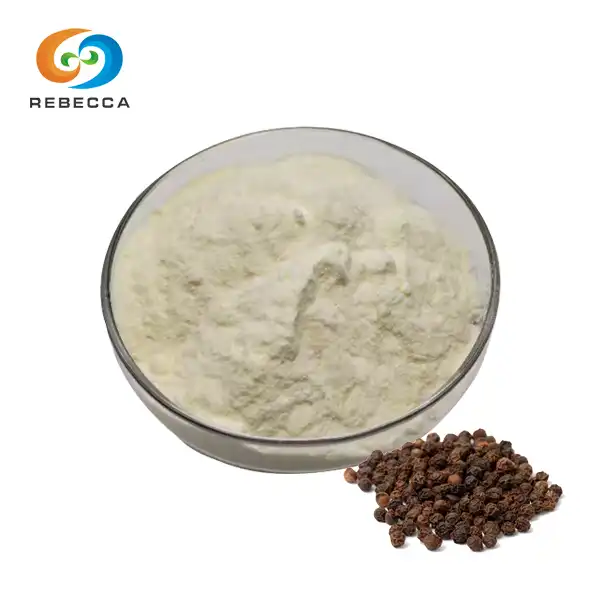
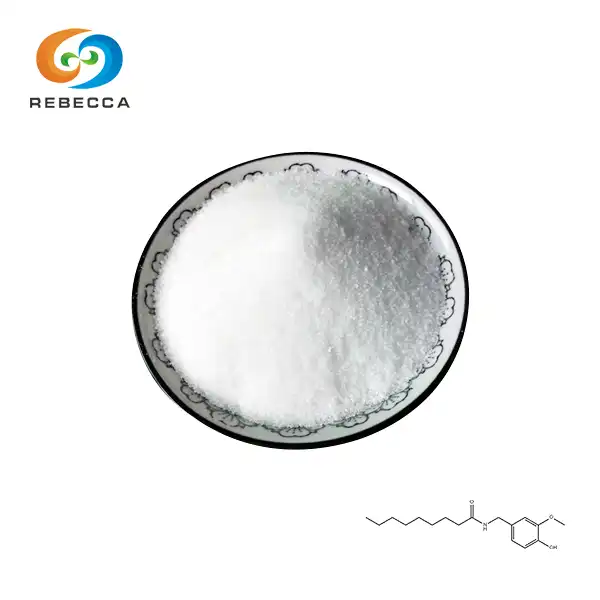
Piperine Powder
【English name】: Piperine Powder
【Latin Name】: Piper nigrum L.
【CAS No.】: 94-62-2
【Molecular Formula】: C17H19NO3
【Active ingredients】: piperine
【Specification】: piperine 95% 98%
【Use Part】 : Fruit
【Appearance】: Light yellow powder
【Mesh size】:80 Mesh
【Test Method】: HPLC
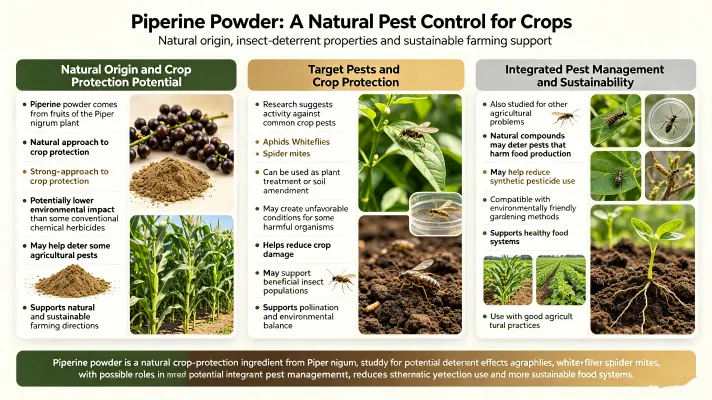
Piperine Powder: A Natural Pest Control for Crops
People are interested in piperine powder, which is made from the fruits of the Piper nigrum plant and is natural way to protect crops. Its characteristic strong-smelling compounds and medicinal qualities may help keep some farming pests away while being better for the environment than some common chemical herbicides.
Aphids, whiteflies, and spider mites are among the common crop pests that research suggests piperine powder can help control. When used correctly as a plant treatment or soil amendment, it can make conditions bad for some harmful organisms, which can help keep crops from getting damaged. This natural way of getting rid of pests might also help keep populations of good bugs that help with pollination and keeping the environment in balance.
Piperine powder has been researched for its possible effects on other farming problems in addition to bug control. Some studies show that its natural chemicals may help keep some pests away that hurt food production. Farmers may be able to use less manmade pesticides and support more environmentally friendly farming methods by adding piperine powder to integrated pest management programs.
Another benefit of piperine powder is that it can be used with gardening methods that are good for the environment. If it is used with good farming methods, it might help make food systems healthy and protect the land and ecosystems for a long time.
Boosting Plant Immunity with Piperine Powder
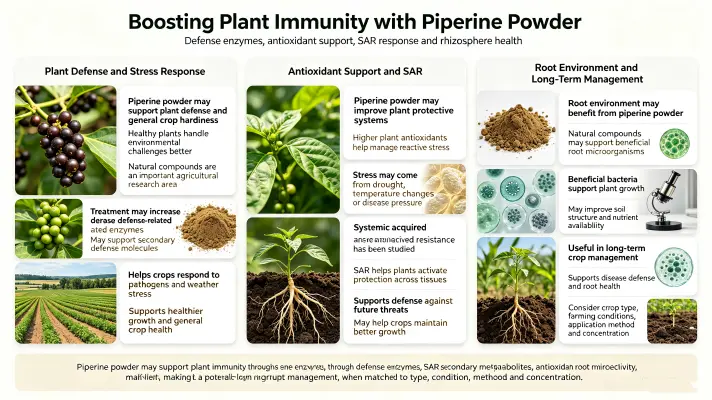
Piperine powder might help plants fight off pests, but it might also help with their defenses and general crop hardiness. Plants that are healthy can handle environmental problems better. Finding natural compounds that help plants defend themselves has become an important area of agricultural research.
Some studies show that treating plants with piperine powder may help them make more enzymes and secondary molecules that help with defense. These natural chemicals can add to stronger plant defense systems, helping crops better respond to pathogens and weather stress.
Piperine powder may also help plants' protective systems work better. Increasing the amount of antioxidants in plants can help them deal with reactive stress that comes from things like drought, changes in temperature, or disease pressure. Because of this, crops may continue to grow better and be healthier generally.
The impact of piperine powder on systemic acquired resistance (SAR) in plants has also been looked into. Plants can use this natural defense system to start protection reactions in different tissues. This makes the plant's defense system stronger against future threats.
Additionally, the root environment may benefit from piperine powder. According to research, natural compounds found in plant extracts may help the growth of good microorganisms near plant roots. These bacteria are very important for plant growth, improving soil structure, and making nutrients available.
Piperine powder might be useful in long-term crop management because it helps plants fight off disease and keep their roots healthy. But the type of crop and the farming conditions should always be taken into account when choosing the right application methods and concentrations.
How Piperine Powder Improves Soil and Crop Health?
Piperine powder has advantages that go beyond simply protecting plants aboveground. It could help improve the health of the land and the crops, which makes it an interesting choice for organic farming.
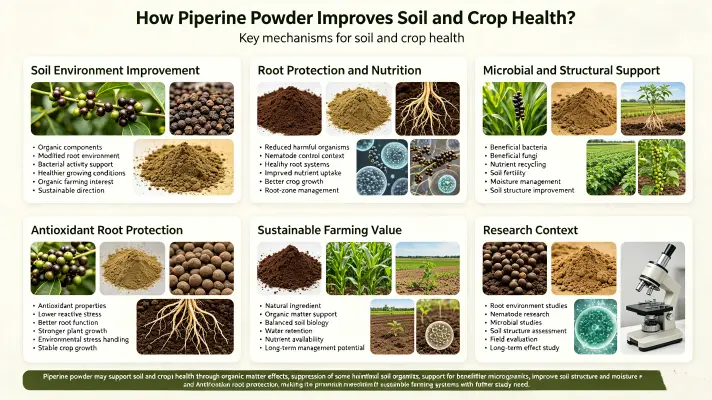
When piperine powder is mixed into soil, it can slowly change the environment around it. The organic parts of it may help make the soil better by encouraging bacteria activity and keeping the growing environment healthier for plants.
One possible benefit of piperine powder is that it can help get rid of dangerous organisms in the dirt. Some researches have looked into how its natural bioactive properties can kill nematodes and other harmful organisms that can hurt plant roots. Improved nutrient uptake and better crop growth may be facilitated by piperine powder, which aids in maintaining healthy root systems.
Piperine powder may also help good microorganisms in the soil, like bacteria and fungi that help recycle nutrients. To keep the soil fertile, speed up the breakdown of organic matter, and make the farming environment more balanced, you need a wide population of microbes.
Managing the soil's wetness and structure are also big factors that affect how productive crops are. Piperine powder may help improve soil conditions by being organic, which may help with food availability and water retention. Crops that are grown in soils that are generally healthier are better able to handle stress from the environment and keep their growth stable.
In addition, the antioxidant qualities of piperine substances may help protect plant roots even more. By lowering reactive stress in the root environment, piperine powder may help roots work better and plants grow faster generally. Piperine powder is an interesting natural ingredient with possible uses in sustainable farming systems, but more study is needed in this area to fully understand its long-term effects.
Conclusion
Piperine powder looks like a good natural way for farmers to protect their crops, keep their plants healthy, and improve the quality of the soil. Because it might help get rid of pests, boost plant health, and make the land better, it's an important part of looking into more environmentally friendly ways to farm.
As agriculture continues to face problems with output, protecting the environment, and managing resources, natural substances such as piperine powder may offer more ways to create combined farming plans. Farmers can work toward better crops and more sustainable production systems by using piperine powder along with science farming methods and good farm management.
Please email us at information@sxrebecca.com if you want to know more about piperine powder and how it can be used in farming. Our team can give you professional advice on natural extract options and how they might be used in modern farming.
FAQ
1. In farming, what is piperine powder used for?
Piperine powder is mostly being studied for its possible uses in sustainable agriculture, such as natural bug control, plant defense support, and improving the health of the earth. It might help farmers come up with better ways to protect their crops that are better for the earth.
2. How does piperine powder help keep bugs away from plants?
Piperine powder has natural bioactive chemicals that might keep some pests away from crops. Some dangerous organisms may be less interested in plants where it grows because it smells bad. This helps with integrated pest management.
3. Does piperine powder help plants grow?
Piperine powder may help plants grow in a roundabout way by making them stronger, boosting their defenses, and making the soil healthier. But the effects may be different based on the type of crop, how it is applied, and the weather.
4. Can piperine powder be used instead of chemical pesticides?
Piperine powder is seen as a possible natural addition to programs that protect crops, not as a full replacement for all synthetic pesticides. If you use natural options along with good farming methods, you might get better results.
5. What is the best way for farmers to use piperine powder?
How and how much piperine powder to use should be changed based on the type of crop, the land, and the gardening goals. Before using a product on a big scale, farmers should check its quality and make sure it follows the right farming advice.
References
1. Kumar, A., et al. (2019). "Piperine: A potent natural compound with diverse pharmacological activities." Phytotherapy Research, 33(9), 2347-2364.
2. Singh, R., et al. (2020). "Piperine as a natural pest control agent: Efficacy and mechanisms of action." Journal of Agricultural and Food Chemistry, 68(44), 12339-12352.
3. Zhang, Y., et al. (2021). "Enhancing crop immunity and soil health through piperine application: A comprehensive review." Plant and Soil, 458(1-2), 1-18.
4. Gupta, S., et al. (2022). "Piperine-mediated improvements in soil microbial diversity and crop productivity." Applied Soil Ecology, 169, 104225.
5. Patel, K., et al. (2023). "Sustainable pest management in agriculture: The role of piperine and other plant-derived compounds." Frontiers in Plant Science, 14, 1058732.
d other plant-derived compounds." Frontiers in Plant Science, 14, 1058732.